Call for Papers
Vol 2, Issue 2 — December 2026
Join our upcoming issue on "Journal of Intelligent Machine Learning and IoT Enabled Applications". We invite researchers to submit their latest findings.

Editor-in-Chief: Dr. K. Saravanan
Publishing Model: Open Access (No APC)
Online ISSN: 3139-3667

Scientific
Intelli-Press (SIP)
Publication Ethics and Malpractice Statement
All parties engaged in the publication process are expected to adhere to ethical principles that uphold integrity, responsibility, and seriousness. The Journal of Intelligent Machine Learning and IoT Enabled Applications is committed to maintaining high standards of ethical conduct. Any violations by editors, reviewers, or authors will be addressed strictly by the Journal. Our ethical framework aligns with recommendations from Elsevier and the COPE Best Practice Guidelines for Journal Editors.
The Journal of Intelligent Machine Learning and IoT Enabled Applications is dedicated to enforcing the highest ethical standards in publishing and actively combats publication malpractice. Authors submitting to the Journal affirm that their work is original, has not been published elsewhere, and is not under consideration by any other publication. Authors also guarantee that their submission is free from plagiarism, and they must disclose any potential conflicts of interest or benefits related to their work.
Duties of Editors
Publication Decisions: The editor-in-chief has the ultimate responsibility for deciding which articles to publish. This decision is guided by the Journal’s policies and legal requirements, such as libel, copyright infringement, and plagiarism. The editor-in-chief may consult with associate editors or reviewers in making these decisions.
Manuscript Review: Each manuscript is first assessed by the editorial assistant using professional software to check for originality. Manuscripts passing this check are then forwarded to an associate editor who coordinates a blind peer review with at least two reviewers. These reviewers make recommendations to the editor-in-chief regarding publication, modification, or rejection. Review periods can range from two weeks to three months, with up to five months allowed in exceptional cases.
Disclosure and Conflicts of Interest: Manuscript reviewers must not use unpublished material from submitted manuscripts for their own research without the authors' explicit written permission.
Fairness: Manuscripts are evaluated solely on their academic merit, without regard to the author’s race, gender, sexual orientation, religious beliefs, ethnicity, citizenship, or political views.
Confidentiality: The editor-in-chief, associate editors, and editorial staff must keep information about submitted manuscripts confidential, sharing it only with the corresponding author, reviewers, potential reviewers, other editorial advisers, and the publisher.
Duties of Reviewers
Timeliness: Reviewers who cannot complete the review within the agreed time frame must inform the associate editor so that the manuscript can be reassigned if necessary.
Confidentiality: All information regarding manuscripts should be treated as confidential and privileged.
Objectivity: Reviews should be conducted impartially, avoiding personal criticism of authors. Reviewers should support their assessments with clear and well-founded arguments.
Acknowledgment of Sources: Reviewers should identify any relevant work that has not been cited by the authors and report any substantial similarity or overlap with other works they are aware of.
Conflict of Interest: Reviewers must not evaluate manuscripts in which they have a conflict of interest, whether due to competitive, collaborative, or other relationships with the authors or institutions involved.
Duties of Authors
Reporting Standards: Authors should present an accurate description of their research and discuss its significance objectively. All data should be represented truthfully, with sufficient detail and references. Fraudulent or inaccurate statements are considered unethical.
Data Access and Retention: Authors may be asked to provide raw data for review and should be prepared to make data publicly accessible if feasible, retaining it for a reasonable time after publication.
Originality and Plagiarism: Authors must ensure that their work is original. Any use of other works must be properly cited or quoted.
Multiple Publications: Authors should not publish essentially identical research in multiple journals. Concurrent submission of the same manuscript to different journals is deemed unethical.
Acknowledgment of Sources: Proper acknowledgment must be given to those who have significantly contributed to the work.
Authorship: Authorship should be limited to individuals who have made significant contributions to the study’s conception, design, execution, or interpretation. All significant contributors should be listed as co-authors, and those who contributed in other ways should be acknowledged.
Disclosure of Conflicts of Interest: All authors must disclose any financial or non-financial conflicts of interest that could influence the results or interpretation of their work. All sources of financial support for the project should be disclosed.
Correction of Errors: If authors find significant errors or inaccuracies in their published work, they must promptly notify the Journal editor or publisher and cooperate in correcting or retracting the paper.
**The Journal of Intelligent Machine Learning and IoT Enabled Applications strictly prohibits plagiarism and treats it as a serious breach of scientific ethics. Any manuscript or published paper found to be plagiarized will be addressed with utmost seriousness. We continually seek advice from our Editorial and Reviewer Boards to uphold publication ethics.
Retraction Policy
In cases where plagiarism is detected, the "Journal of Intelligent Machine Learning and IoT Enabled Applications" will implement corrective measures based on the nature and extent of the plagiarism. Responsibility for the content of the plagiarized work lies with all listed authors unless the investigation concludes otherwise. The Editorial Board is committed to thoroughly investigating all claims of plagiarism and resolving them swiftly.
Procedures for Handling Plagiarism in a Published Article:
Multiple Submission (Simultaneous Submissions) and Prior Publication
We kindly remind you that submissions to the "Journal of Intelligent Machine Learning and IoT Enabled Applications" must be original works that have not been previously published or are currently under consideration for publication elsewhere. The journal does not permit simultaneous submissions to multiple journals or conferences, as this practice can lead to copyright conflicts, disputes, and inefficient use of editorial and financial resources.
Simultaneous submissions create unnecessary complications, such as duplication of efforts in the review process and potential confusion in citations and indexing. These practices waste valuable time, resources, and publication space, which could be better utilized for other high-quality research.
Authors who engage in multiple submissions without appropriate notification to the editors or who fail to properly cite their previous work may face disciplinary actions, including but not limited to:
Authorship and Contributorship
Authors and contributors fulfill essential roles in the research, writing, and preparation of manuscripts submitted to The Journal of Intelligent Machine Learning and IoT Enabled Applications. Advanced Scientific Intellipress, as the publisher, assumes that all listed authors have agreed to the content and have given explicit consent to submit the manuscript. Prior to submission, authors are expected to obtain consent from the relevant authorities at their institution or organization. The Journal of Intelligent Machine Learning and IoT Enabled Applications recommends adhering to the following authorship guidelines. Specifically, all authors listed on a manuscript should have contributed in the following ways:
Made substantial contributions to the conception or design of the work; the acquisition, analysis, or interpretation of data; or the development of new software used in the work.
1. Drafted the work or revised it critically for significant intellectual content.
2. Provided final approval of the version to be published.
3. Agreed to be accountable for all aspects of the work to ensure that questions related to the accuracy or integrity of any part of the work are properly investigated and resolved.
Diversity and Inclusion Statement
The Journal of Intelligent Machine Learning and IoT Enabled Applications and Advanced Scientific Intellipress are committed to fostering an inclusive, diverse, and equitable environment for all contributors and readers. We believe that diversity of perspectives, backgrounds, and experiences strengthens research and enriches the scientific community. To support this mission, we actively encourage submissions from authors of all genders, ethnicities, nationalities, abilities, and backgrounds.
Unethical Research Practices
The Journal of Intelligent Machine Learning and IoT Enabled Applications and Advanced Scientific Intellipress hold a zero-tolerance policy toward unethical research practices. Adhering to the highest standards of research integrity is crucial to ensure that the scientific community and the public can trust and build upon published research. Authors are expected to avoid the following unethical practices, which may result in rejection, retraction, or reporting to relevant authorities:
1.Plagiarism: The use of others' work or ideas without proper attribution is strictly prohibited. This includes text recycling, improper paraphrasing, and copying figures or data.
2.Data Fabrication and Falsification:
Manipulating or inventing data, results, or methodologies to misrepresent research findings is considered a serious violation of research ethics.
3.Duplicate Submission and Redundant Publication:
Manuscripts should not be submitted to more than one journal at the same time or published multiple times without clear justification and approval.
4.Improper Authorship Attribution:
All listed authors should meet authorship criteria and have made substantial contributions. Ghost authorship, honorary authorship, and failing to acknowledge significant contributors are considered unethical.
5.Conflicts of Interest:
Authors, reviewers, and editors should disclose any financial, personal, or professional conflicts that could affect the integrity of the research and review process.
6.Manipulating Citations:
Citation manipulation for the purpose of increasing citations to specific articles or journals, known as citation stacking or padding, is not acceptable.
7.Ethical Oversight:
Research involving human subjects, animals, or sensitive data must follow relevant ethical guidelines. Failure to obtain ethical approval or to adhere to ethical standards in handling data and research subjects constitutes a breach of integrity. We are committed to identifying and addressing any unethical practices in submissions to uphold the trustworthiness and integrity of scientific research.
Informed Consent and Participant Privacy
The Journal of Intelligent Machine Learning and IoT Enabled Applications follows the ethical guidance set by the Advanced Scientific Intellipress Editors, which acknowledges that all study participants have a right to privacy that must not be violated without informed consent.
1.Consent to Participate
Informed, written consent must be obtained voluntarily from all participants involved in a study before its commencement. If the participant is a minor or considered vulnerable and unable to provide informed consent, a legal guardian is required to give consent. If the participant is deceased, consent may be obtained from the next of kin. Participants must fully understand the study they are engaging in, including any associated risks. Authors must include a statement in the manuscript confirming that consent has been obtained from participants. If verbal consent is obtained instead of written consent, authors should explain why written consent was not feasible, describe the approval process for verbal consent, and outline the methods used to document it.
2.Consent to Publish
Participants who agree to partake in a study may not necessarily agree to have their identifiable data published. Identifiable data includes, but is not limited to, descriptions, photos, images, videos, names, dates of birth, and biometrical characteristics. Identifiable data should generally be omitted from the manuscript wherever possible. For manuscripts that include such data, authors must obtain written informed consent to publish these details. Consent must be received from the participant (or a legal guardian for minors or next of kin for the deceased) prior to submission. If there is any uncertainty, written consent should be sought. Manuscripts containing identifiable images or data must include a statement affirming that permission was obtained to publish this information. If data is anonymized, authors must state that no consent to publish was necessary. Any alterations made to images or data for anonymization purposes should not distort the scientific content.
Appeals and Complaints
The Journal of Intelligent Machine Learning and IoT Enabled Applications is committed to maintaining a transparent and fair review process. Authors, reviewers, and readers are encouraged to bring forward any appeals or complaints they may have, and these will be addressed in a thorough, unbiased, and respectful manner.
1.Appeals Process
If an author disagrees with an editorial decision, they may submit a formal appeal. The appeal should include a clear rationale, addressing specific aspects of the decision and providing evidence or further clarification to support the case. Appeals should be submitted in writing to the editorial office and will be reviewed by an editor not involved in the initial decision. The editorial team will carefully re-evaluate the manuscript in light of the appeal and provide a final decision, which is typically binding.
2.Complaints Process
We welcome complaints related to any aspect of the journal, including the review process, editorial decisions, or ethical concerns. Complaints should be directed to the journal’s editorial office and should include a detailed description of the issue. Upon receipt, the complaint will be reviewed by the editorial team, and, if necessary, escalated to the publisher. We are committed to responding promptly and professionally, with the goal of reaching a fair resolution. We value feedback and are dedicated to improving our processes. Both appeals and complaints are treated with confidentiality and respect for all involved parties.
Conflicts of Interest and Competing Interests
A conflict of interest arises when an individual or entity's personal or self-serving interests conflict with their professional responsibilities, potentially impacting the reliability of academic publications. Such conflicts can be particularly harmful to the integrity of scholarly work. If the Editor-in-Chief suspects a conflict of interest, they should promptly inform the publisher (e.g., if an author on a submitted manuscript is based at the same institution or is working on a competing project). Similarly, if a reviewer recognizes a conflict of interest—such as knowing the author’s identity or being affiliated with the same institution—they should inform the Editor-in-Chief immediately. Authors are responsible for declaring any potential conflicts of interest when submitting their manuscript. This should include all relevant financial or personal connections that could be perceived as influencing the research. Competing interests may include, but are not limited to, sources of funding, financial relationships, employment affiliations, and non-financial interests that could impact the objectivity of the work.
Data Sharing and Reproducibility
Authors seeking to reproduce a chapter or article from The Journal of Intelligent Machine Learning and IoT Enabled Applications in a future publication, whether for commercial or non-commercial use, should contact Advanced Scientific Intellipress at the Intellectual Property and Contracts Division. Authors are encouraged to review the Fair Use Policy for further guidance on data sharing and reproduction.
Paid Advertisements
The Journal of Intelligent Machine Learning and IoT Enabled Applications currently does not accept paid external advertisements for publication.
We highly appreciate your adherence to these guidelines, which help maintain the integrity and quality of our journal.
For any inquiries, please contact us at info@jiml-iea.com.**
Vol 2, Issue 2 — December 2026
Join our upcoming issue on "Journal of Intelligent Machine Learning and IoT Enabled Applications". We invite researchers to submit their latest findings.
| Year | No. of Manuscripts Received | Documents Published | Percentage (%) of Acceptance |
|---|---|---|---|
| 2025 | 35 | 12 | 34% |
| 2026 | 10 | Current Issue Ongoing | - |

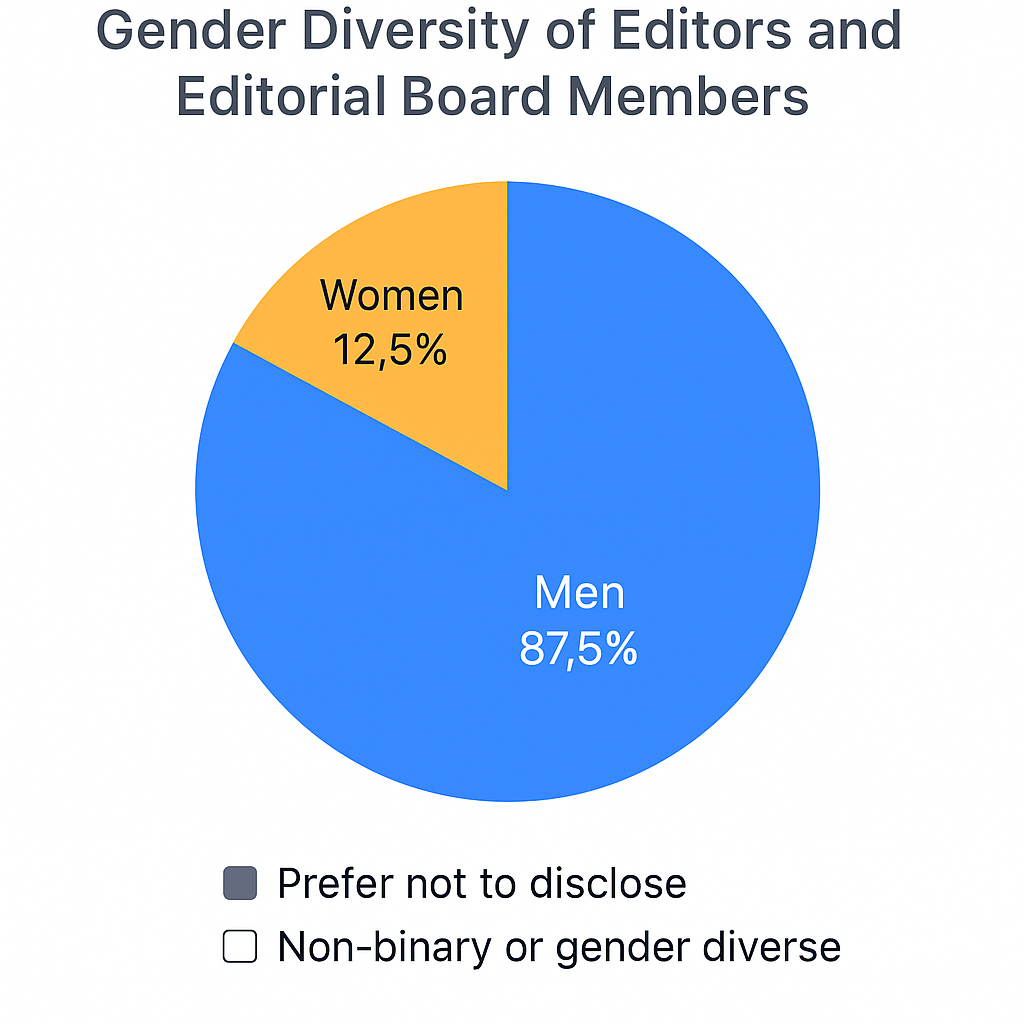
We value transparency and inclusion in the gender distribution among our editorial team: