Call for Papers
Vol 2, Issue 2 — December 2026
Join our upcoming issue on "Journal of Intelligent Machine Learning and IoT Enabled Applications". We invite researchers to submit their latest findings.

Editor-in-Chief: Dr. K. Saravanan
Publishing Model: Open Access (No APC)
Online ISSN: 3139-3667

Scientific
Intelli-Press (SIP)
Submitting a manuscript to the Journal of Intelligent Machine Learning and IoT Enabled Applications signifies that the content has not been previously published; it is not currently under review elsewhere; and that it has been approved by all co-authors, if applicable, as well as by the relevant authorities at the institution where the research was conducted. The publisher will not be liable for any claims for compensation related to the publication.
Submission should be done via OJS; other modes of submission are not accepted.
Authors who wish to include figures, tables, or text excerpts from other sources must obtain permission from the copyright holders for both print and online formats. Evidence of this permission must be provided when submitting the manuscript. Materials submitted without such proof will be considered original to the authors.
To submit your manuscript, please click on the “Submit your manuscript” link and follow the instructions provided to upload all required files.
Ensure that all relevant editable source files are provided with each submission and revision. Manuscripts submitted without a complete set of editable files will not be reviewed. Please submit your manuscript text in standard word processing formats such as .docx or .doc.
Ensure that your title page includes:
Provide an abstract of 150 to 250 words.
Abstract heading: Cambria, size 12, bold
Abstract content: Cambria, size 9
Provide 4 to 6 keywords.
Keyword heading: Cambria, size 10
Keyword content: Cambria, size 9, italic, lowercase
Manuscripts should be submitted in Microsoft Word. Use 10-point Cambria for regular text. Section headings (e.g., INTRODUCTION) should be 12-point Cambria, bold, ALL CAPS.
Create tables using Word’s table function. Use Equation Editor or MathType for equations. Save the file as .docx or .doc.
Manuscript template: JIML-IEA template
Use a decimal numbering system for headings.
Define all abbreviations at first use and apply consistently.
Number tables consecutively. Cite them in order of appearance. Table caption: centered, Cambria size 10, bold → "Table x" Table content: Cambria size 9 Footnotes: lowercase letters placed below the table.
Ensure legible lines and text. Scanned images must be 600 dpi minimum. Embed fonts in vector graphics. Figure caption: centered, Cambria size 9, bold → "Figure x" Footnotes: lowercase letters below figure.
Mention all applicable competing interests below the references section.
A:
B:
Journal Article
Ashok, P., Latha, B. Absorption of echo signal for underwater acoustic signal target system using hybrid of ensemble empirical mode with machine learning techniques. Multimed Tools Appl (2023). volume, issue, page no. https://doi.org/10.1007/s11042-023-15543-2
Article by DOI
Ashok, P., Latha, B. Absorption of echo signal for underwater acoustic signal target system using hybrid of ensemble empirical mode with machine learning techniques. Journal of Intelligent Machine Learning and IoT Enabled Applications (2000). https://doi.org/10.102107/00086
Online Document
Carriages, Ashok.P., Big stars have weather too (2007). IOSSP Publishing House. http://publishingwebs.org/articles/news/12/3/15/1. Accessed 26 June 2010
Vol 2, Issue 2 — December 2026
Join our upcoming issue on "Journal of Intelligent Machine Learning and IoT Enabled Applications". We invite researchers to submit their latest findings.
| Year | No. of Manuscripts Received | Documents Published | Percentage (%) of Acceptance |
|---|---|---|---|
| 2025 | 35 | 12 | 34% |
| 2026 | 10 | Current Issue Ongoing | - |

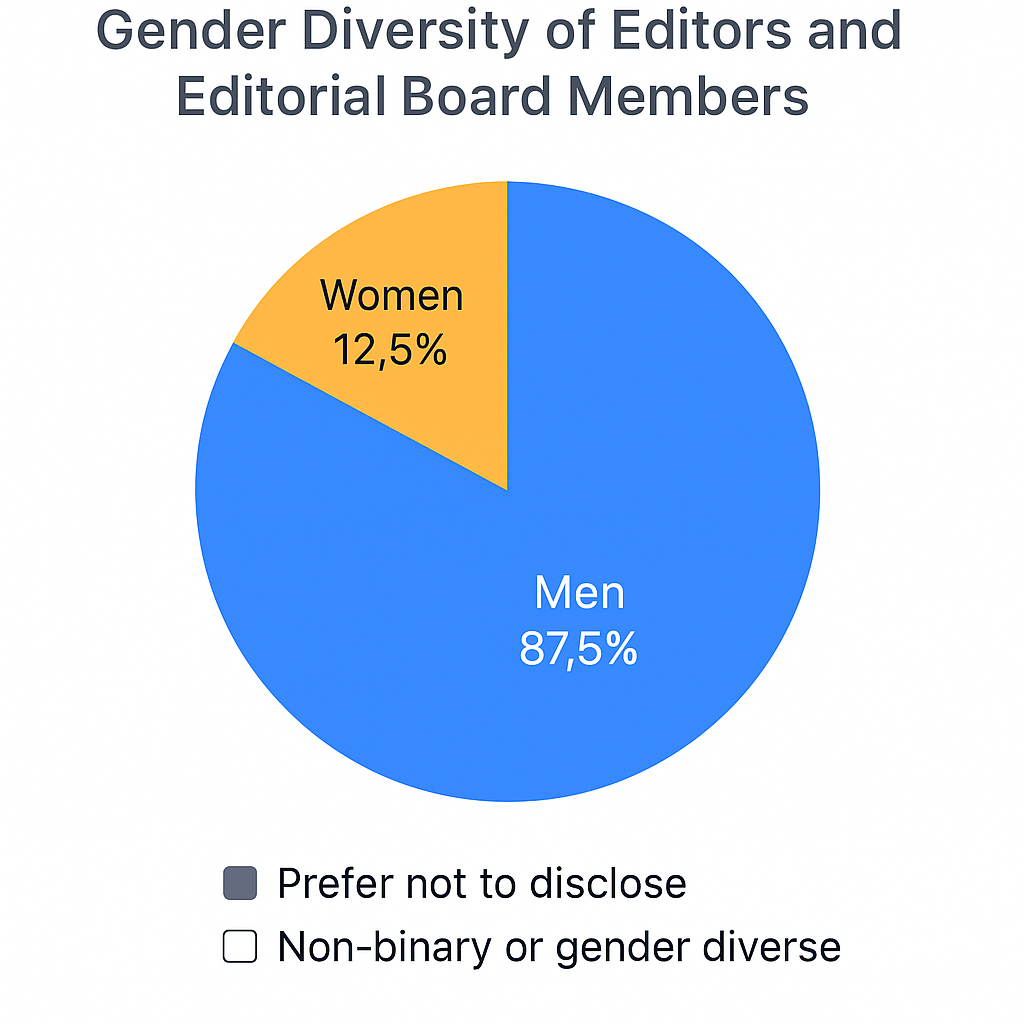
We value transparency and inclusion in the gender distribution among our editorial team: