Call for Papers
Vol 2, Issue 2 — December 2026
Join our upcoming issue on "Journal of Intelligent Machine Learning and IoT Enabled Applications". We invite researchers to submit their latest findings.

Editor-in-Chief: Dr. K. Saravanan
Publishing Model: Open Access (No APC)
Online ISSN: 3139-3667

Scientific
Intelli-Press (SIP)
The Journal of Intelligent Machine Learning and IoT Enabled Applications (JIML-IEA) is committed to maintaining editorial independence, transparency, fairness, and academic integrity in the handling of all manuscripts, including submissions authored by members of the journal's editorial board, advisory board, or active reviewer pool.
This policy establishes the principles and procedures governing such submissions and ensures that all editorial decisions are based solely on scholarly quality, originality, methodological soundness, relevance, and scope.
The journal is published by Scientific Intelli-Press (SIP). The publisher supports the editorial independence of the Editor-in-Chief and editorial team and does not interfere with individual editorial decisions.
Editorial decisions on every manuscript submitted to the Journal of Intelligent Machine Learning and IoT Enabled Applications are made based on:
The publisher, Scientific Intelli-Press (SIP), does not participate in or influence editorial decisions concerning individual manuscripts.
The Editor-in-Chief and editorial team are responsible for maintaining independent and impartial editorial judgment, free from commercial, institutional, personal, or other competing interests.
The journal recognises editorial independence as an essential principle of responsible scholarly publishing.
The journal recognises that members of its editorial and advisory teams, as well as active reviewers, may wish to submit their own scholarly work to the journal.
Such submissions are permitted; however, appropriate safeguards are implemented to prevent actual, potential, or perceived conflicts of interest and to ensure that the manuscript receives an independent and unbiased evaluation.
For the purpose of this policy, an editorial submission is a manuscript in which one or more authors holds any of the following positions at the time of submission:
An active reviewer may be considered a reviewer who has completed a review for the journal within the preceding 24 months.
A manuscript authored by an editorial board or advisory board member will be assigned to an independent handling editor who:
Where an appropriate internal editor is unavailable, the Editor-in-Chief may appoint an external independent editor to oversee the manuscript.
An editorial board member who is an author of the manuscript will be fully recused from all editorial activities related to that submission.
The author-editor will not participate in:
Editorial submissions will undergo independent external peer review.
Reviewers will be selected based on their subject expertise and must have no known conflict of interest with the authors or the manuscript.
Where appropriate, the journal may use double-blind peer review to further strengthen impartiality.
The final decision to accept, revise, or reject the manuscript will be made by the independent handling editor based on the peer-review reports and the journal's editorial criteria.
The author-editor will have no influence over the editorial decision.
Published articles authored by members of the journal's editorial or advisory board may include an appropriate declaration such as:
"This article was submitted by a member of the journal's editorial or advisory board. In accordance with the Journal's Editorial Independence Policy, the manuscript was handled independently by an editor without a conflict of interest with the authors and underwent independent external peer review. The author-editor was fully recused from the editorial decision-making process."
The journal maintains an appropriate editorial workflow record for editorial submissions, including:
These records may be reviewed for legitimate quality assurance, ethical, indexing, or audit purposes.
The Journal of Intelligent Machine Learning and IoT Enabled Applications aims to maintain a reasonable proportion of articles authored by members of its editorial, advisory, or active reviewer community.
The journal will monitor the proportion of such publications periodically to ensure that editorial independence and scholarly diversity are maintained.
An article will be considered an editorial submission if at least one of its authors holds an editorial, advisory, or active reviewer role in the journal at the time of submission.
The Editor-in-Chief will monitor such publications as part of the journal's ongoing commitment to editorial integrity and transparency.
The journal may publish periodic transparency information regarding editorial submissions and conflicts of interest as part of its commitment to responsible and ethical scholarly publishing.
Where appropriate, such information may be included in the journal's News and Announcements or other publicly accessible sections of the journal website.
All members of the editorial team are expected to disclose any actual, potential, or perceived conflict of interest that may affect their ability to make an impartial editorial decision.
Conflicts may include, but are not limited to:
An editor with a relevant conflict of interest must recuse themselves from the editorial handling of the affected manuscript.
The manuscript will subsequently be assigned to another qualified and independent editor.
Scientific Intelli-Press (SIP), the publisher of the Journal of Intelligent Machine Learning and IoT Enabled Applications, supports the journal's editorial independence.
The publisher is responsible for functions such as:
Editorial decisions concerning individual manuscripts remain the responsibility of the Editor-in-Chief and designated editorial team.
The publisher does not influence decisions regarding the acceptance, revision, or rejection of individual manuscripts.
Any attempt to improperly influence an editorial decision would be inconsistent with this policy and the journal's commitment to academic integrity and editorial independence.
Concerns regarding editorial independence, conflicts of interest, peer-review procedures, or the handling of a particular manuscript may be communicated confidentially to the Editor-in-Chief.
Editor-in-Chief
Journal of Intelligent Machine Learning and IoT Enabled Applications
Scientific Intelli-Press (SIP)
Editorial Email:
Where a concern cannot be appropriately resolved at the editorial level, the matter may be escalated through the journal's established publishing and ethical-review procedures.
This Editorial Independence Policy is reviewed periodically by the journal's editorial leadership to ensure that it remains consistent with the journal's scope, publishing practices, and principles of responsible scholarly communication.
Vol 2, Issue 2 — December 2026
Join our upcoming issue on "Journal of Intelligent Machine Learning and IoT Enabled Applications". We invite researchers to submit their latest findings.
| Year | No. of Manuscripts Received | Documents Published | Percentage (%) of Acceptance |
|---|---|---|---|
| 2025 | 35 | 12 | 34% |
| 2026 | 10 | Current Issue Ongoing | - |

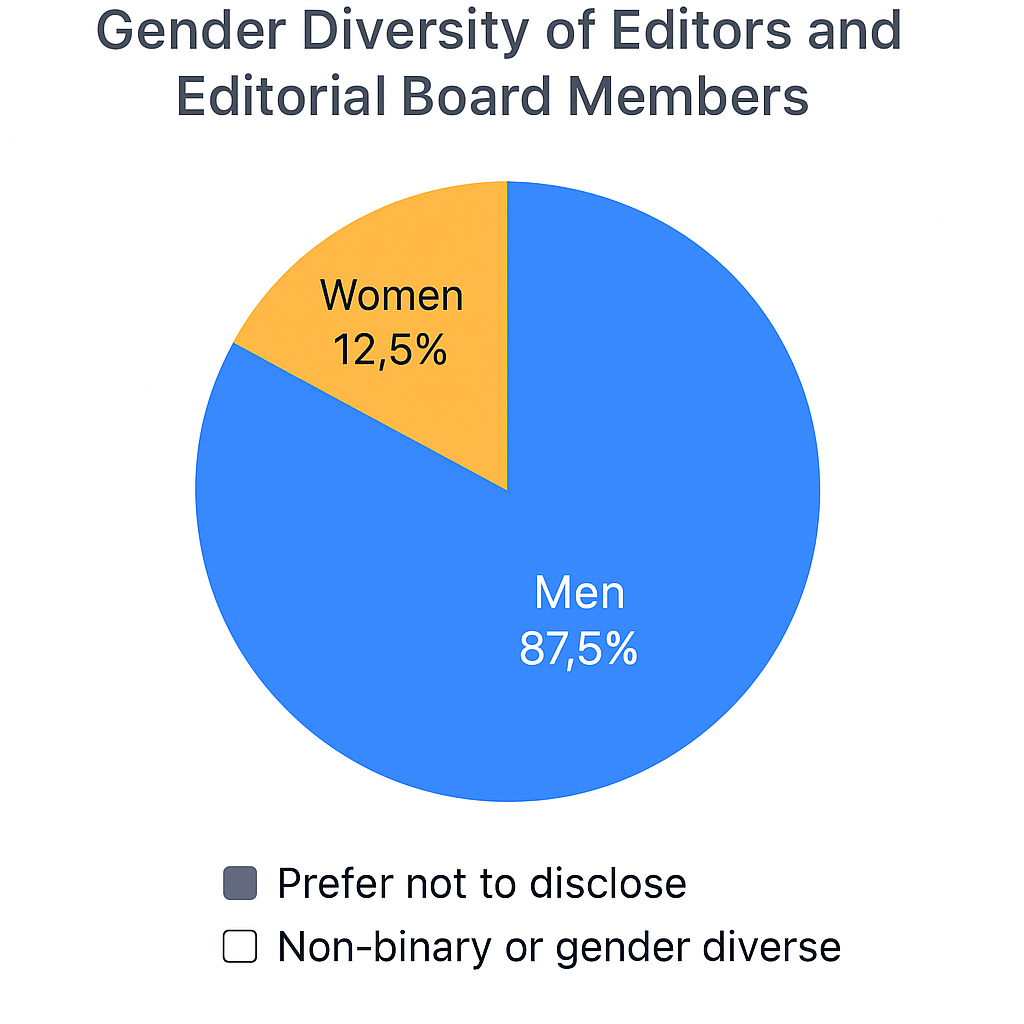
We value transparency and inclusion in the gender distribution among our editorial team: